IDIAL Installation Guide
System Requirements
Before deploying IDIAL as a Docker container on a Linux-based system, ensure the following requirements are met:
- Python 3.x
- At least 30 GB of free storage
- Docker (latest version)
Installation
Step 1: Launch the Installer
Navigate to the directory containing the deployment script and execute it with the following command:
./install-idial.py
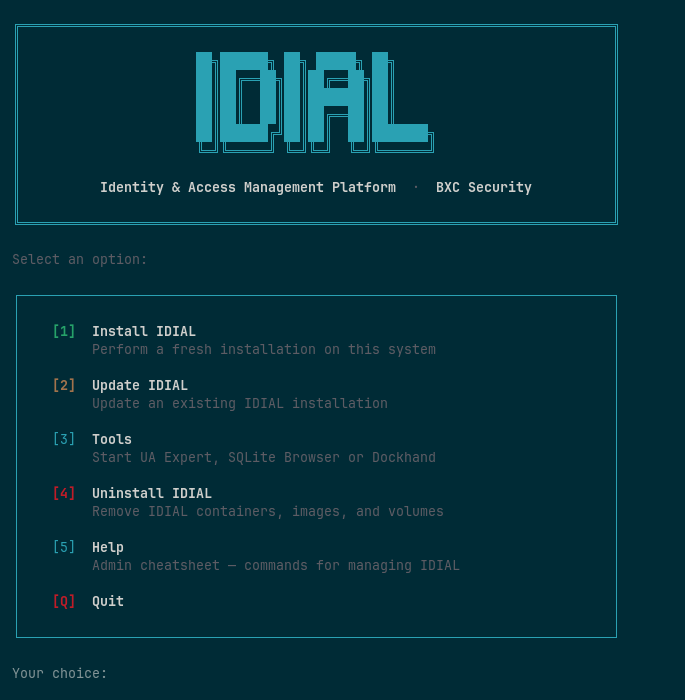
The installer menu will appear. Select [1] Install IDIAL to begin the installation process.
Step 2: Prerequisites Check
The installer will automatically verify that all required dependencies are present. If Docker is not installed, the installer will offer to install it on your behalf.
Step 3: Select Deployment Mode
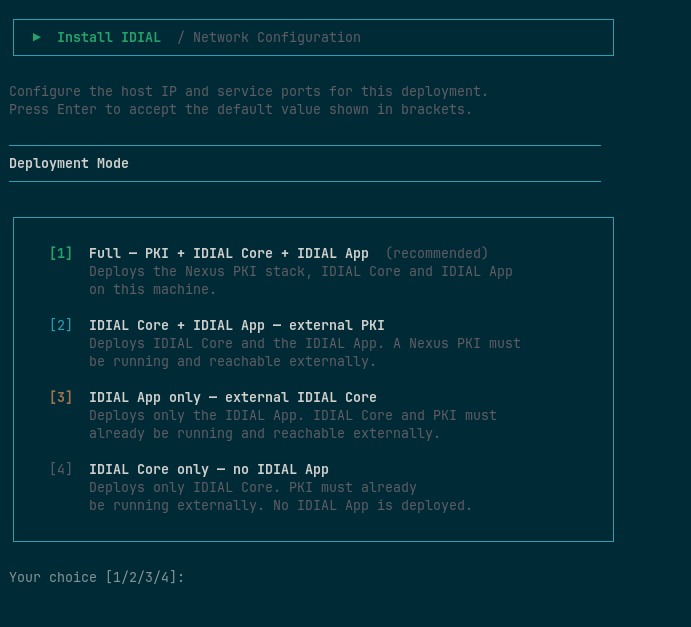
Choose the deployment mode that best suits your infrastructure:
| Option | Description |
|---|---|
| [1] Full — PKI + IDIAL Core + IDIAL App (recommended) | Deploys the complete stack including the bundled Nexus PKI, IDIAL Core, and IDIAL App on this machine. |
| [2] IDIAL Core + IDIAL App — external PKI | Deploys IDIAL Core and IDIAL App. A Nexus PKI must be running and reachable externally. |
| [3] IDIAL App only — external IDIAL Core | Deploys only the IDIAL App. IDIAL Core and PKI must already be running and reachable externally. |
| [4] IDIAL Core only — no IDIAL App | Deploys only IDIAL Core. PKI must already be running externally. No IDIAL App is deployed. |
Step 4: Network Configuration
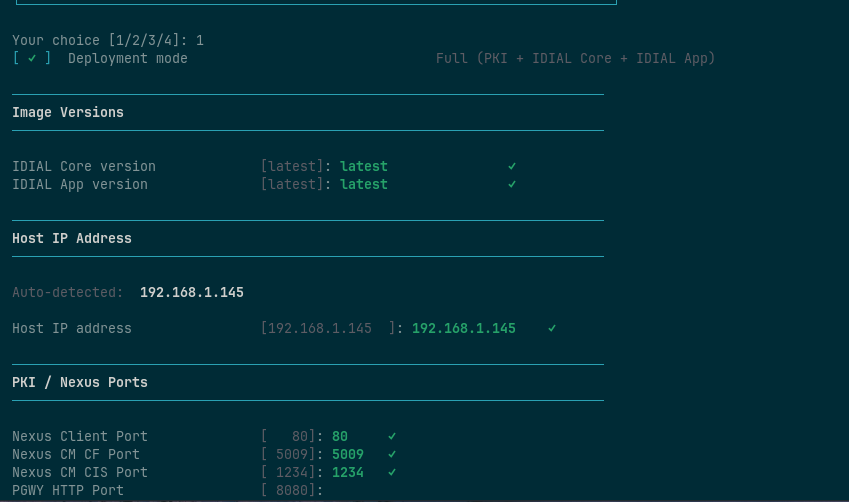
The interactive configuration wizard will prompt you to enter the network settings for your deployment. If you are unsure about a specific value, you may press Enter to accept the suggested default.
Step 5: Encryption Master Key
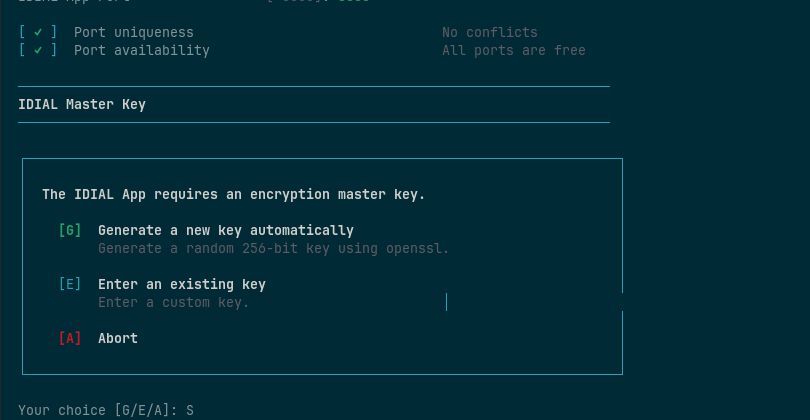
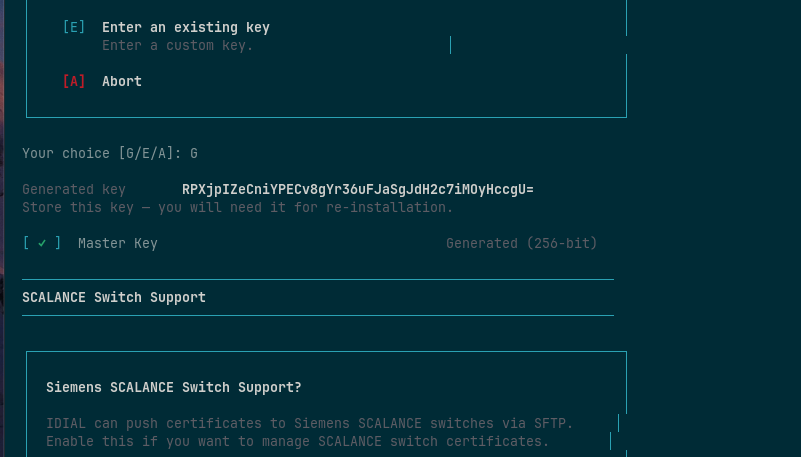
The installer will prompt you to either generate a new encryption master key or provide an existing one for IDIAL App.
- [G] Generate a new key automatically — Generates a random 256-bit key using OpenSSL.
- [E] Enter an existing key — Allows you to supply a custom key.
Store the generated key in a secure location immediately. It will not be displayed again. You will be required to re-enter this key during future re-installations.
Step 6: Installation Process
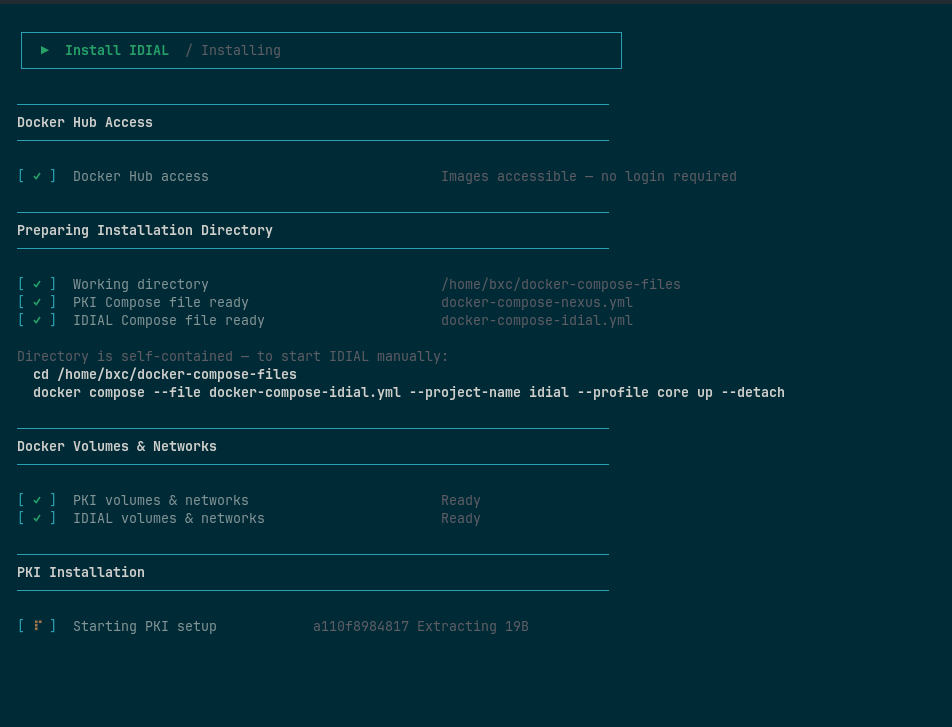
Once the configuration is complete, the installation will begin. If you are not yet authenticated with your API key, the installer will prompt you to log in at this stage.
The installer will:
- Prepare the Docker Compose working directory
- Pull all required container images from Docker Hub
- Configure Docker volumes and networks
- Start PKI and IDIAL services
Step 7: Verify the Deployment
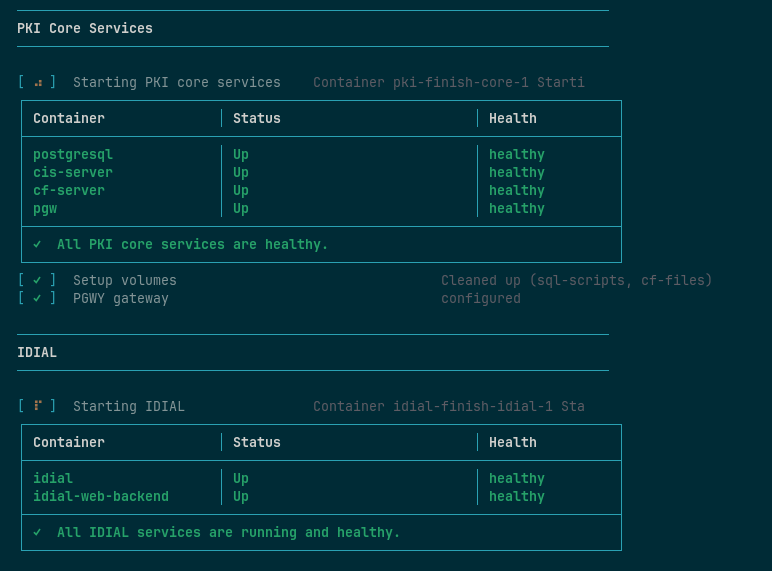
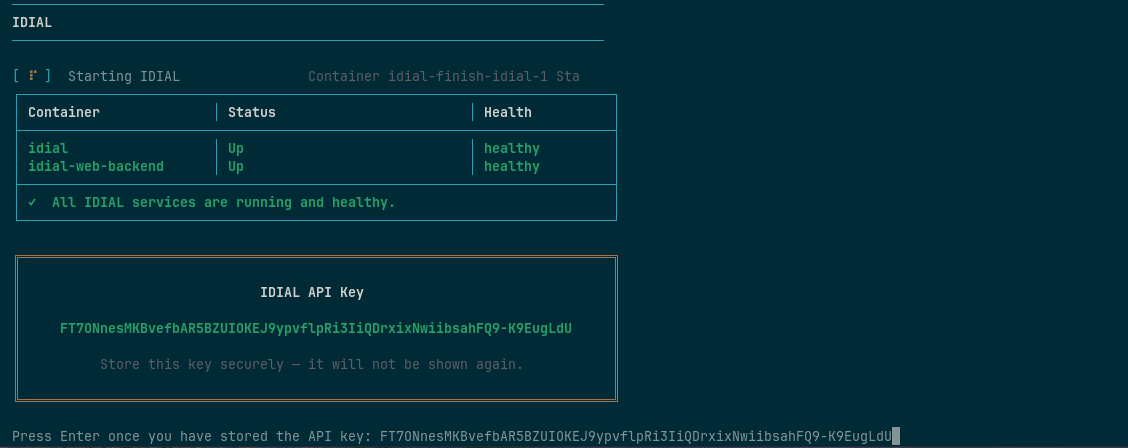
After the installation completes, the installer will display a status overview. All containers must be listed as healthy before proceeding.
Step 8: Save the IDIAL API Key
At the end of the installation, the IDIAL API Key will be displayed.
Store this key in a secure location immediately. It will not be shown again. You will be required to confirm the key by re-entering it before the installer exits.
Uninstallation
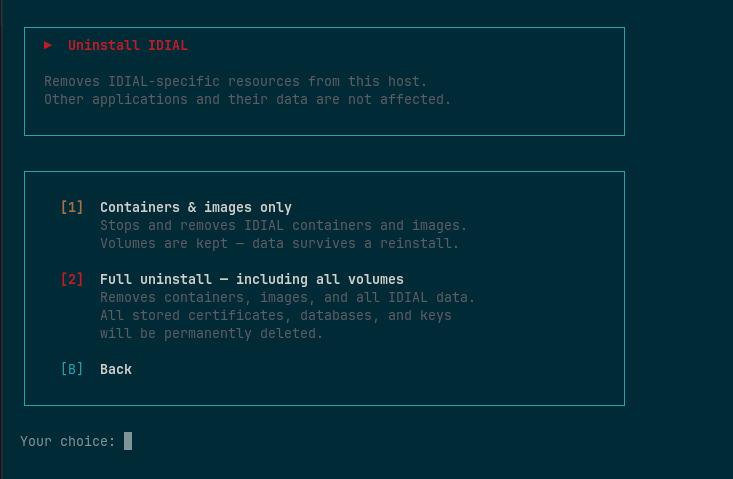
To uninstall IDIAL, launch the installer script and select [4] Uninstall IDIAL from the main menu.
You will then be presented with two options:
| Option | Description |
|---|---|
| [1] Containers & images only | Stops and removes IDIAL containers and images. Docker volumes are retained — data survives a reinstall. |
| [2] Full uninstall — including all volumes | Removes containers, images, and all IDIAL data. All stored certificates, databases, and keys will be permanently deleted. |
IDIAL App — Initial Setup
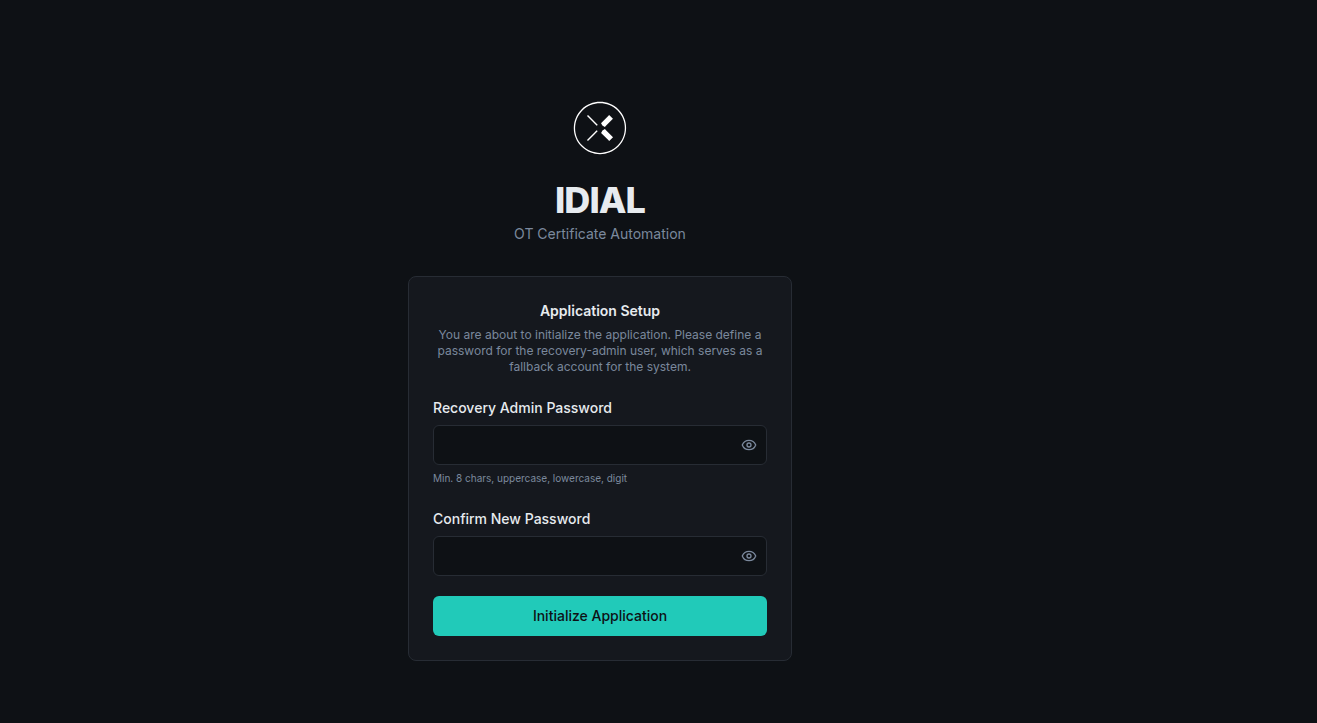
When accessing the IDIAL App for the first time, you will be prompted to initialize the application by setting a password for the recovery-admin user. This account serves as a fallback administrator for the system.
Store the recovery-admin password in a secure location. If this password is lost, access to the fallback account cannot be restored without reinstallation.
After initialization, you can sign in using the username recovery-admin and the password you defined.